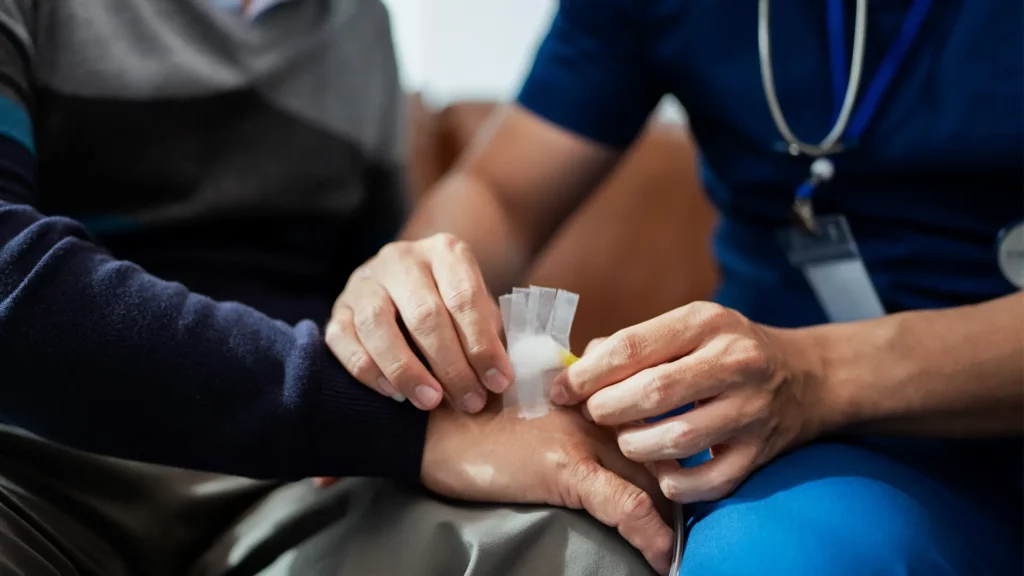
When a resident develops a wound, the clinical response is immediate and focused: assess, dress, document, monitor. That response is necessary. But facilities that get consistently good wound outcomes tend to be doing something beyond the wound itself and that is paying attention to the broader conditions that shape whether a person heals or doesn’t.
That broader approach has a name: wound wellness. And it’s a way of thinking about wound care that treats the wound as a signal.
A Wound Is Rarely Just a Wound
Every wound exists in the context of a whole person; their circulation, their sleep, their appetite, their mood, their mobility, their history. Two residents with clinically similar wounds can have very different healing trajectories based on factors that have nothing to do with the dressing applied or the turning schedule followed.
A resident who isn’t sleeping well is producing less of the hormonal activity that supports tissue repair. One who has quietly stopped eating enough isn’t giving her body the raw materials healing requires. Another who has become withdrawn and sedentary since a family visit last month has reduced circulation to the very area where his wound is located. None of these observations show up in a wound assessment. All of them affect what happens next.
Wound wellness asks care teams to hold both things at once: the wound that needs clinical attention, and the person whose body is – or isn’t in a position to heal it.
What This Looks Like in Practice
Adopting a wound wellness mindset doesn’t require a new program or additional staff. It requires a slightly wider lens during the interactions your team is already having.
It looks like a CNA noticing that a resident with a heel wound has barely touched her meal tray for three days and mentioning it at shift handoff. It looks like a charge nurse flagging that a resident seems more confused than usual which may indicate an underlying change in his condition, not just his wound. It looks like a care conference that includes a conversation about a resident’s activity level and emotional state alongside the clinical wound update, rather than treating those as separate topics for a different meeting.
The goal isn’t to turn every caregiver into a clinician. It’s to make sure the clinical picture includes what only the full care team can see the day-to-day details that don’t make it into a wound assessment but quietly determine its outcome.
Why Administrators Should Care About This Frame
For administrators, wound wellness matters for a straightforward reason: facilities that treat wounds in isolation tend to be reactive. They manage the wound that’s there. Facilities that think in terms of wound wellness are better positioned to catch the conditions that create wounds before those wounds develop and to support faster, more consistent healing when wounds do occur.
This isn’t abstract. It shows up in care conferences that are more productive because every discipline is contributing relevant information. It shows up in family conversations that are more confident because your team can speak to the whole picture, not just the wound measurements. It shows the difference between a resident who heals on schedule and one who cycles through wound after wound because the underlying conditions were never fully addressed.
Wound wellness is also a useful frame for staff culture. When frontline caregivers understand that their observations about appetite, sleep, mood, mobility are clinically relevant, their role in the care process expands in a meaningful way. That sense of contribution matters for engagement and retention, not just for outcomes.
The Question That Opens the Conversation
If your facility’s wound care discussions focus primarily on wound measurements, dressing types, and visit frequency, consider introducing one additional question into every wound-related care conference: What else is going on with this resident that might be affecting their ability to heal?
That question doesn’t require a new protocol. It doesn’t require additional documentation. It just shifts the conversation from the wound to the person which is where the most useful information often lives.
Bella Health Group’s approach to mobile wound and wellness care is built around exactly this principle. Every visit is an opportunity to look at the full picture because healing happens in a person, not just in a site.
Disclaimer: The information provided in this article is intended for general informational and educational purposes only. It does not constitute medical advice, clinical guidance, or a substitute for professional healthcare consultation. Care decisions for individual residents should always be made by licensed clinicians in accordance with applicable standards of practice, facility policies, and governing regulations. Bella Health Group makes no representations or warranties regarding the completeness or accuracy of this content. Facilities are encouraged to consult qualified clinical and legal professionals before implementing any changes to care programs or policies.