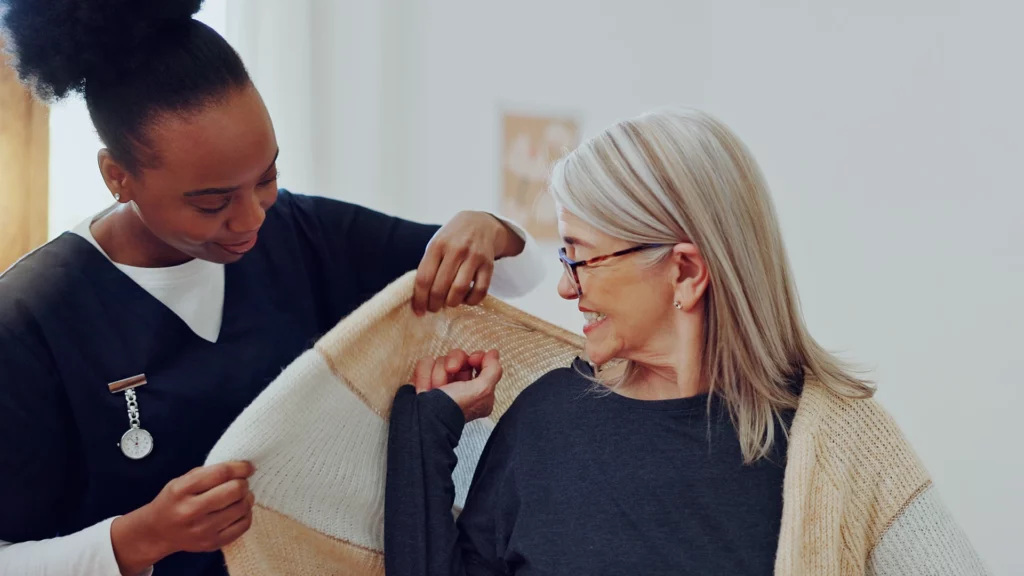
You’re helping a resident get dressed in the morning and you notice something on her upper back — a reddened area, about the size of a quarter, that wasn’t there last week. She says it doesn’t hurt. You’re not a nurse. You’re not sure if this is something or nothing. You finish getting her ready, make a mental note, and move on to the next resident.
That moment of noticing, the uncertainty, the not-quite-sure-what-to-do, happens dozens of times a day in assisted living communities across the country. And more often than not, the person in that moment is a caregiver with good instincts and no clear framework for acting on them.
Why Skin Changes Matter More Than They Look
Skin is the body’s largest organ, and in older adults it becomes progressively more vulnerable. It thins, loses elasticity, and takes longer to recover from pressure, friction, or moisture. A change that might resolve quickly in a younger person can become a serious problem in someone in their eighties, especially when underlying conditions like diabetes or poor circulation are already affecting the body’s ability to repair itself.
This is why early noticing matters so much. A small area of persistent redness, what clinicians call a potential pressure injury in its earliest stage, can be addressed relatively easily when caught early. Left unnoticed for a few days, the same spot can break down into a wound that requires weeks of treatment. The difference between those two outcomes often comes down to whether someone on the care team noticed and said something.
That someone is frequently a caregiver, not a nurse.
What to Look For During Daily Care
You don’t need clinical training to recognize the signs that warrant a closer look. During bathing, dressing, and personal care, moments when you have direct contact with a resident’s skin, a few things are worth paying attention to.
Redness that doesn’t fade. Skin that looks red or pink after pressure is released, and stays that way, is worth flagging. Healthy skin rebounds. Skin under stress doesn’t.
Skin that looks or feels different. Unusual warmth, firmness, or puffiness in an area, even without visible redness, can signal something happening beneath the surface. So can skin that feels cooler than the surrounding area.
Moisture damage. Skin that’s regularly exposed to moisture from incontinence, perspiration, or wound drainage becomes fragile. Look for areas that appear raw, irritated, or rash-like, particularly in skin folds or around the groin and buttocks.
New breaks or blisters. Any area where the skin has opened, blistered, or formed a scab that wasn’t there before should be reported promptly, even if it looks minor.
Bony prominences. The areas most vulnerable to pressure-related skin breakdown are where bone sits close to the surface: heels, ankles, the base of the spine, hips, shoulder blades, and the back of the head. These deserve an extra moment of attention, especially in residents who spend significant time in bed or in a wheelchair.
Reporting Is the Skill
Here’s what’s important to understand: your job isn’t to diagnose what you’re seeing. It’s to describe it and report it. Those are two very different things, and the second one is entirely within your scope.
When you notice a skin change, a useful mental script is simply: where is it, how big does it look, what does it look like, and when did I first notice it? That’s the information a nurse needs to make a clinical judgment. You don’t need to know what it means. You need to describe what you see.
The barrier that most often prevents timely reporting isn’t indifference. It’s uncertainty about whether something is significant enough to mention. The answer, when it comes to skin changes in older adults, is almost always: yes, mention it. A nurse can quickly determine whether it warrants action. But they can only do that if they know about it.
If your facility doesn’t have a clear, easy process for caregivers to report skin observations, something faster and less intimidating than a formal incident report, that’s worth raising with your supervisor. The easier it is to flag something, the more reliably it happens.
The Habit That Makes a Real Difference
Skin awareness doesn’t require extra time. It requires a slightly more intentional version of the time you’re already spending with residents. A few extra seconds during a morning routine to check the areas most prone to breakdown. A habit of noting anything that looks different and saying something before the shift ends.
The caregivers who catch skin changes early aren’t doing something extraordinary. They’re doing something consistent. And in assisted living, where clinical oversight is lighter than in a skilled nursing setting, that consistency is one of the most valuable things a care team can offer a resident.
Disclaimer: The information provided in this article is intended for general informational and educational purposes only. It does not constitute medical advice, clinical guidance, or a substitute for professional healthcare consultation. Care decisions for individual residents should always be made by licensed clinicians in accordance with applicable standards of practice, facility policies, and governing regulations. Bella Health Group makes no representations or warranties regarding the completeness or accuracy of this content. Facilities are encouraged to consult qualified clinical and legal professionals before implementing any changes to care programs or policies.